
Blog Details
Common Building Materials and Interior Finishes Used in Saudi Arabian Construction Projects
By GBT Author • 3/25/2026
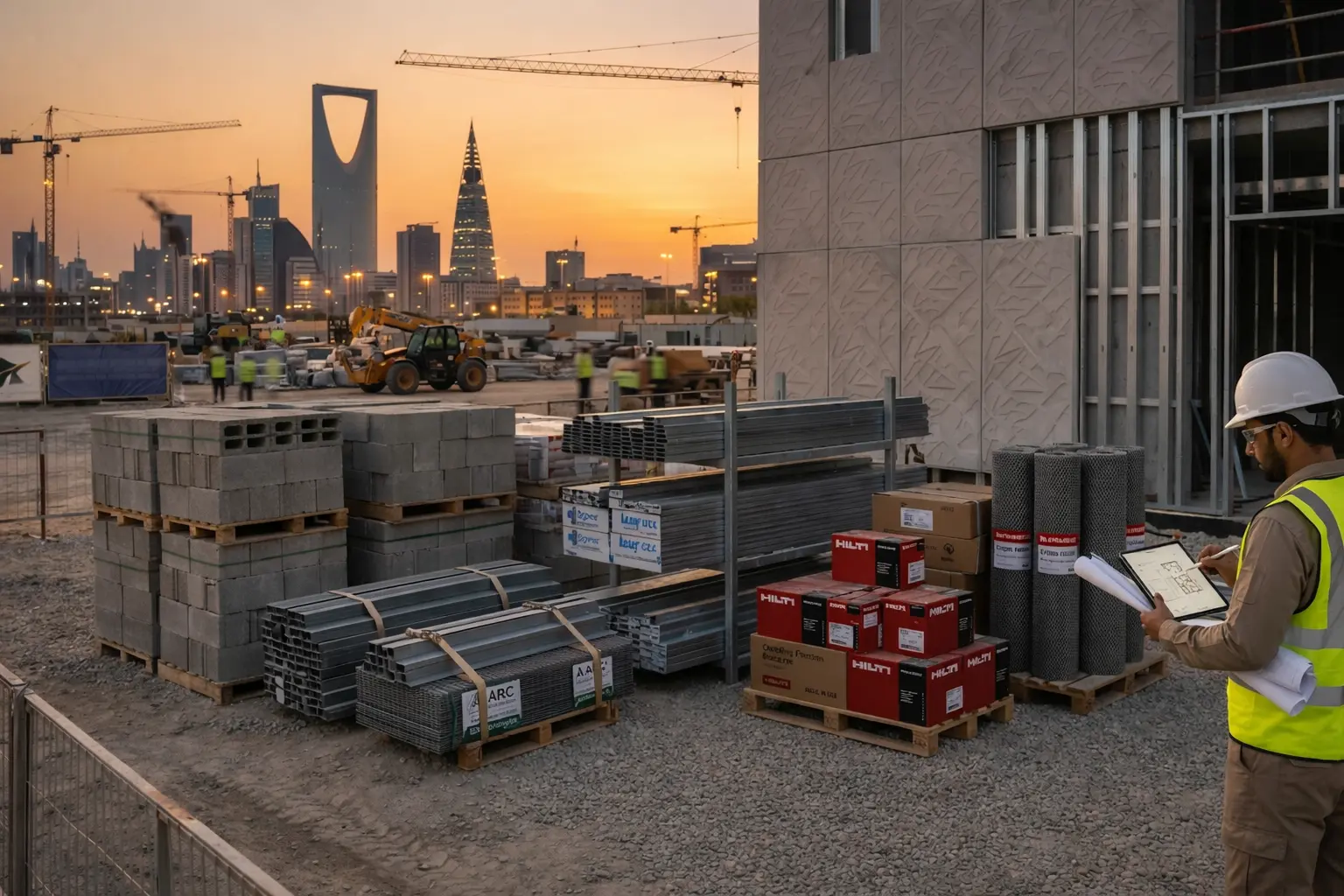
A no-nonsense guide for contractors and procurement teams working on projects across KSA.
Gulf Basic Trading
Building & Construction Material Supplier · Dammam, Jubail & Riyadh, KSA · Est. 2021
If you've managed a construction project in Saudi Arabia, you already know the pattern: the design looks straightforward on paper, then the procurement list runs to three pages and half the items have a four-week lead time.
Knowing which materials are standard on Saudi projects – and where the supply gaps usually appear – helps you plan better, order earlier, and avoid the kind of site stoppages that push projects past their handover date.
This guide covers the building materials and interior finishes you'll encounter on most construction projects across Saudi Arabia – whether you're working in Riyadh, Dammam, Jubail, or anywhere else in the Kingdom. It's not an exhaustive catalogue. It's a practical reference for the materials that actually come up repeatedly on site.
Structural Materials – What Every Project Starts With
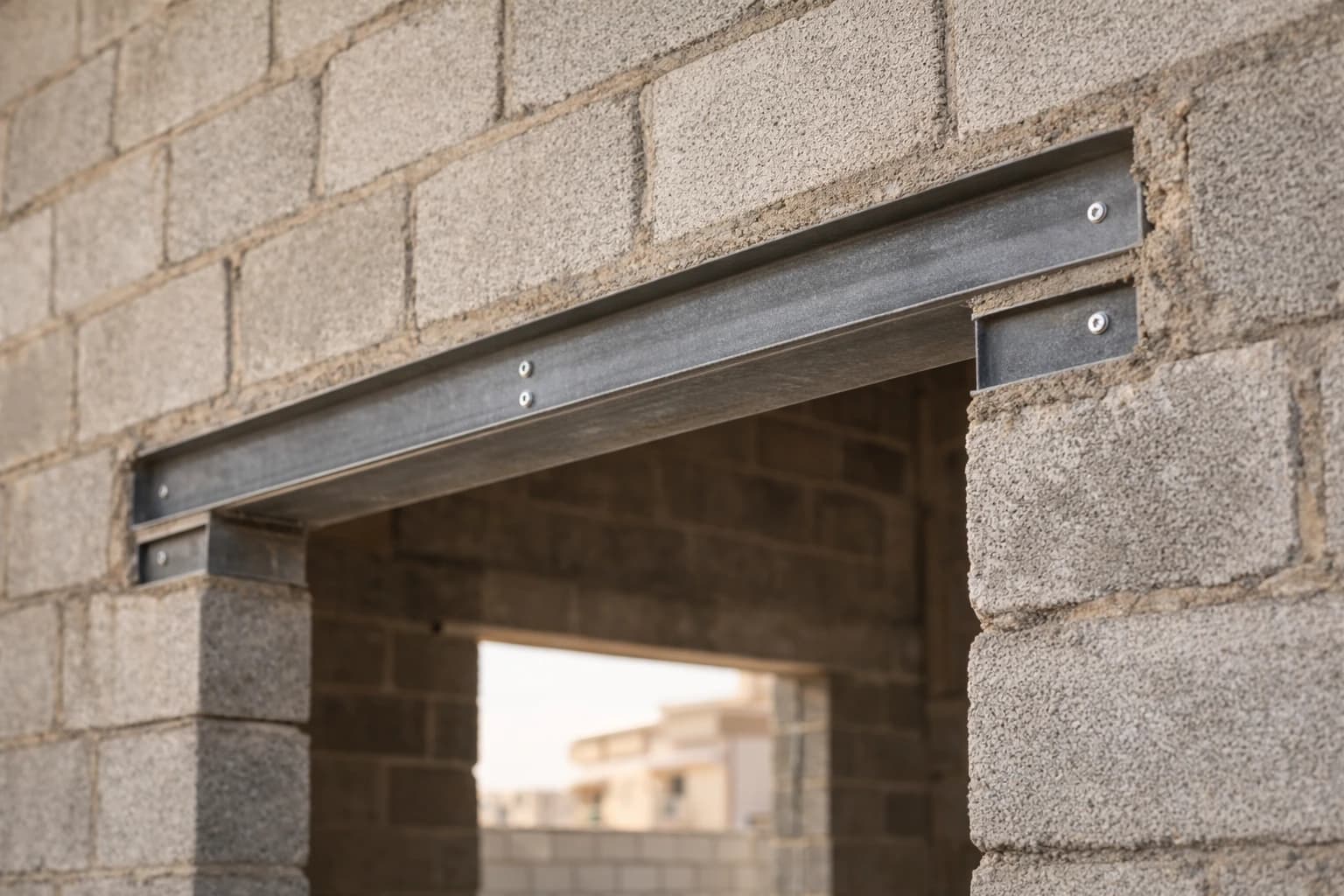
Steel Lintels and Block Reinforcement
Masonry block construction is still the standard for most low-to-mid-rise residential and commercial buildings across KSA. Steel lintels go above every door and window opening – without them, the block wall above the opening has nothing structural to sit on.
Bed joint reinforcement (ladder or truss wire) gets laid into the mortar courses every few rows to stop horizontal cracking, especially in walls that are long or carry lateral loads. It's a simple detail that prevents expensive remedial work later.
These are not glamorous materials, but running out of them on site – or getting the wrong size – can hold up bricklaying for days. Gulf Basic Trading stocks steel lintels and block reinforcement in Dammam and can supply across Jubail and Riyadh for projects that need consistent availability.
Expanded Metal Mesh
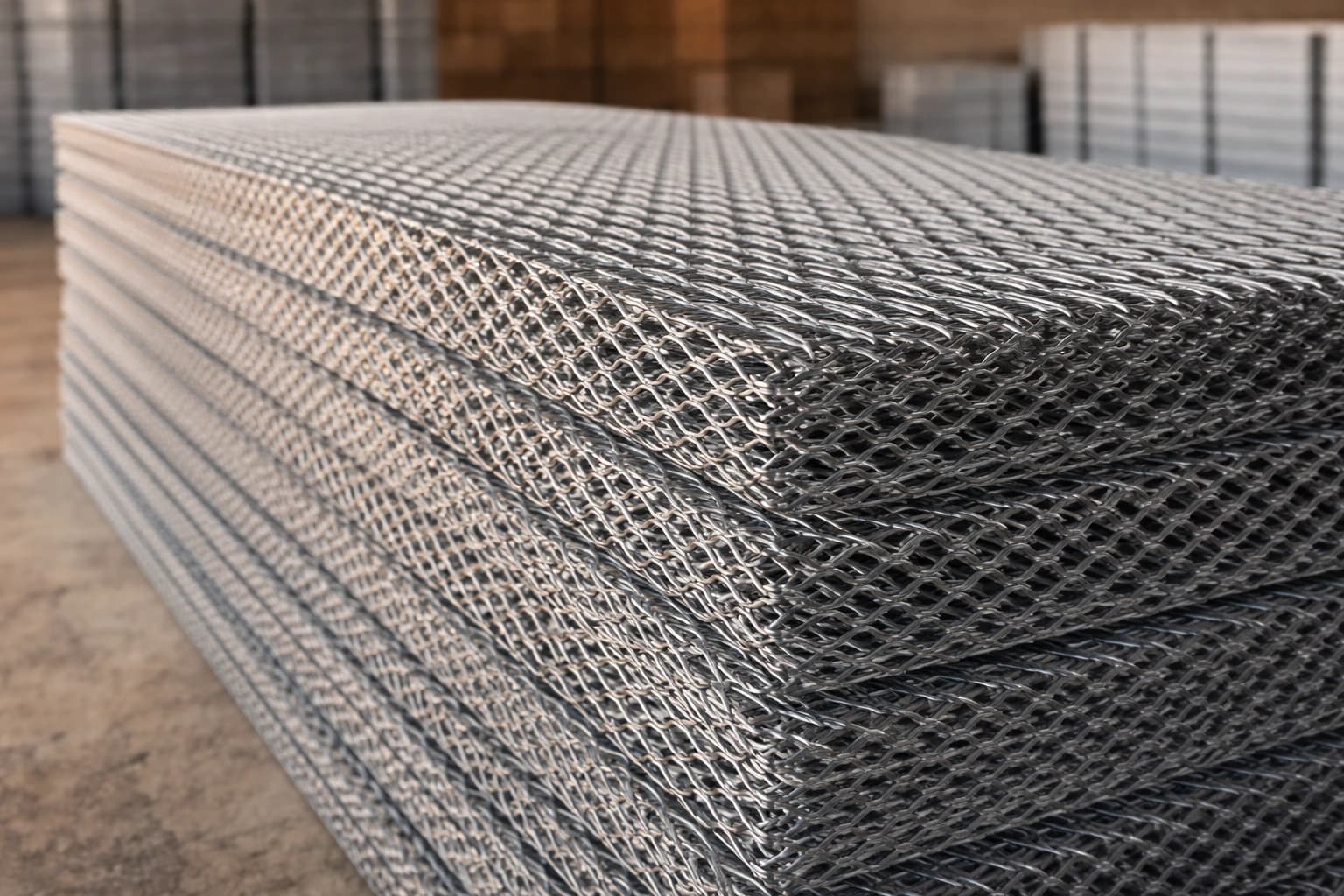
Expanded metal mesh is used as a reinforcing layer under external render and internal plaster – particularly at junctions between concrete columns and block walls, where two different materials meet and movement cracks are almost inevitable without reinforcement.
On most Saudi projects, the consultant's specification will call for galvanised expanded mesh at these junctions. It's one of those items that are easy to forget in the initial procurement list but create a real problem if it's not on site when the plasterers are ready to start.
A missing box of mesh beads or angle trims can hold up an entire plastering gang for a day. It sounds minor – until it's your project running behind.
Channel Systems
Channel systems – slotted metal framing used to support pipes, cable trays, and HVAC ducts – are a basic requirement on any project with significant MEP services. The main advantage over welded supports is speed: you can adjust and reconfigure without going back to a fabricator.
On industrial and oil and gas projects in Jubail and the Eastern Province, channel systems are specified heavily. The same systems appear in hospitals, commercial buildings, and data centers in Riyadh and Dammam wherever services run through ceilings and service corridors.
Facade and External Wall Materials
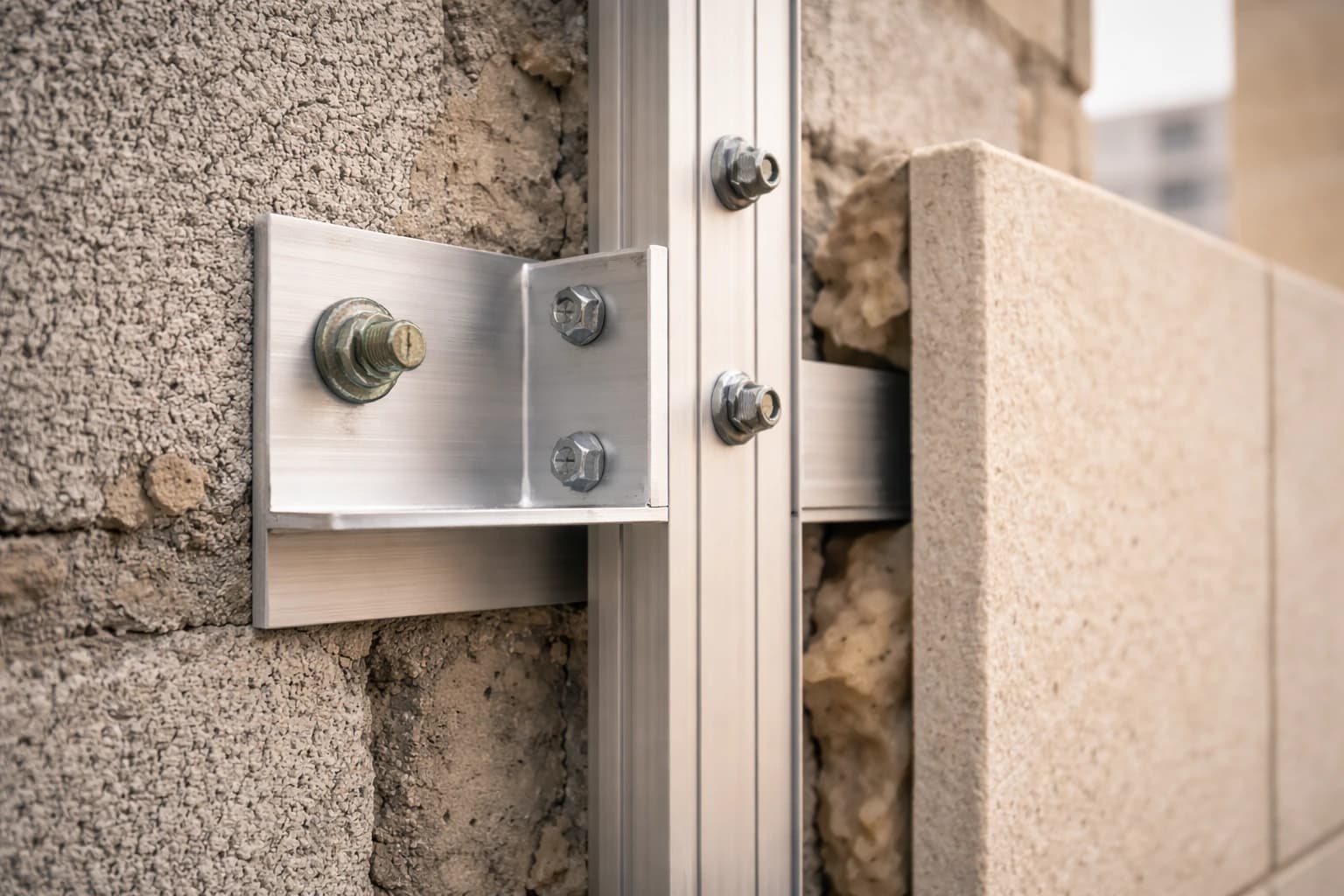
Cladding Fixation Systems
If your project has an external facade that's anything other than painted render, you'll be dealing with a cladding fixation system. These are the engineered brackets, rails, and anchors that hold stone, GRC, aluminium composite, or terracotta panels securely to the building structure.
In Saudi Arabia's climate, thermal expansion is a real issue – panels heat up significantly during the day and cool overnight. The fixation system has to accommodate that movement without cracking panels or pulling anchors loose over time. Getting the specification right at the start, and sourcing fixation systems that come with proper technical data and test documentation, matters a lot when a consultant or municipality inspector asks for it.
Gulf Basic Trading supplies cladding fixation systems for the facade types most commonly used on Saudi projects – with technical sheets available for project submission.
GRC Cladding – Growing Fast in KSA
Glass Reinforced Concrete (GRC) has become one of the most specified facade materials on Saudi Arabia's larger construction projects over the past few years. It's lighter than solid concrete, can be cast into complex shapes, and handles the local climate well.
You'll see GRC on government buildings, cultural facilities, and residential towers where the design calls for Arabic geometric patterns or ornamental detail that would be too heavy or expensive to achieve in stone. The fixation accessories for GRC – embedded channels, brackets, and structural anchors – are different from standard stone fixing systems, so procurement teams need to ensure they're sourcing the right components for the panel system specified.
Interior Finishes – What Goes In After the Structure
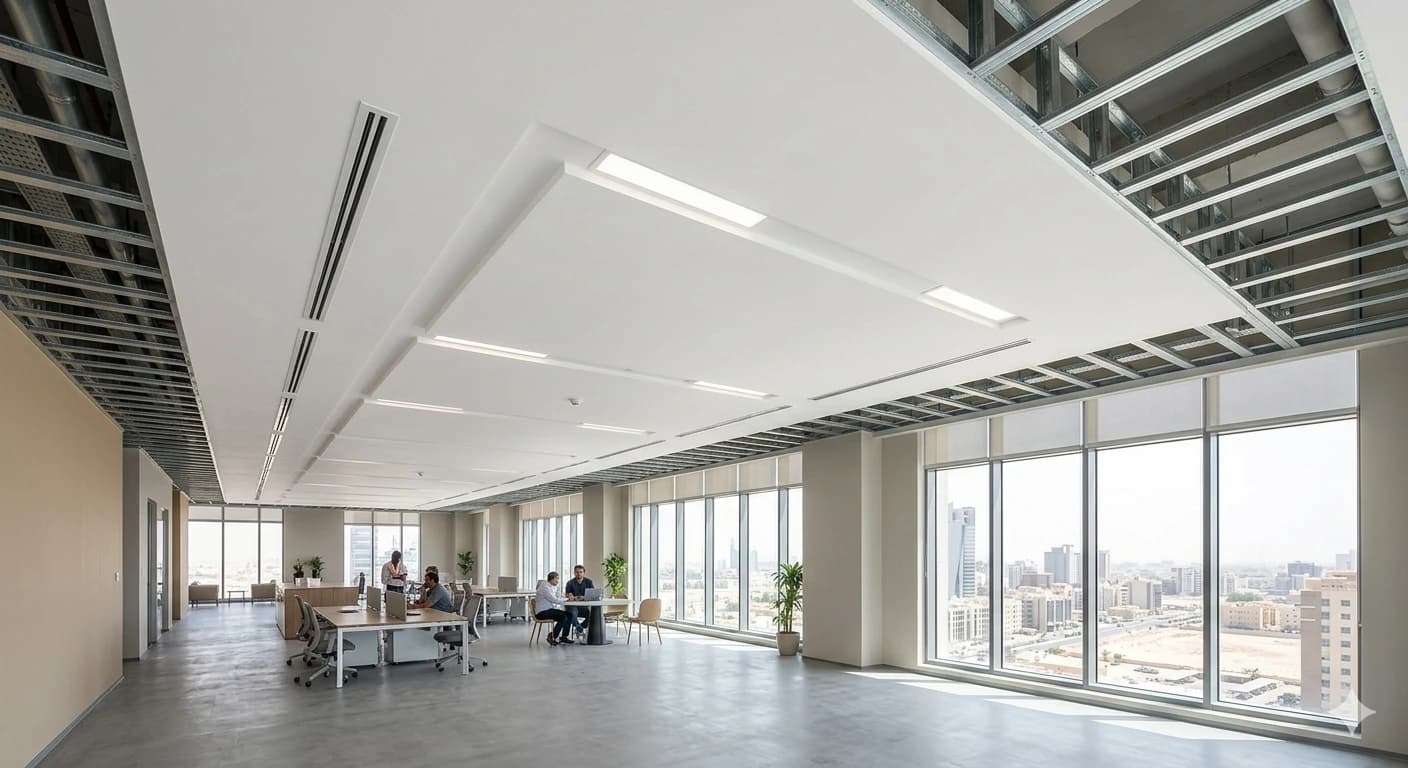
Gypsum Profiles and False Ceiling Systems
Almost every building in Saudi Arabia – residential, commercial, hospitality, or healthcare – has a suspended false ceiling. It hides the services running above (electrical, HVAC, plumbing), improves the thermal performance of the space, and gives the interior its finished look.
The steel framing that holds the ceiling up – CD furring channels, wall angles, primary channels, and suspension systems – is what Gulf Basic Trading supplies as gypsum profiles. These are high-volume, repeating items on any project. Running short partway through a ceiling installation is a common cause of delays, especially when lead times for replenishment extend beyond a week.
Ordering gypsum profile quantities accurately at the start of the fit-out phase – based on ceiling areas plus a sensible wastage allowance – is one of the simpler ways to keep interior works on schedule.
Plaster Accessories
Plaster beads, angle trims, stop beads, and movement joint profiles are small items that make a visible difference to the finished quality of plastered surfaces. Corners done without angle beads chip and crack. Reveals done without stop beads look uneven.
These accessories are often an afterthought in initial procurement – until the plasterers ask for them and they're not there. They're low cost relative to the work they support, so it makes sense to order a full set from the start rather than chasing individual items as the work progresses.
Tiling and Stone Finishes
Large-format porcelain tiles are now standard on most mid-to-high-end residential and commercial projects across Saudi Arabia. Natural stone – marble, travertine, limestone-is still widely used in hospitality, government buildings, and upscale residential developments.
The tile adhesive, grout, and jointing system matters as much as the tile itself. Saudi Arabia's temperature cycles – hot days, cooler nights, air conditioning running most of the year – create conditions that will find weaknesses in a poorly specified tile fixing system. Using the correct flexible adhesive and movement joints is not optional; it's what prevents floor and wall failures during the first few years of use.
Paints and Coatings
Interior paint specifications for Saudi Arabia typically prioritise durability and washability. With high footfall and frequent cleaning in commercial and institutional buildings, low-quality paints show wear quickly and need repainting well ahead of their expected lifespan.
For external surfaces, UV resistance and resistance to sand abrasion are the key performance requirements. For industrial spaces – warehouses, workshops, plant rooms – epoxy floor coatings and specialist wall coatings are the standard. Fire-rated intumescent coatings are required on exposed structural steel in most commercial building classifications under the Saudi Building Code.
A Note on Sourcing in Saudi Arabia
The challenge with most of these materials is not finding a supplier – it's finding a supplier who has consistent stock, can deliver to your site location across KSA, and will give you accurate lead times rather than optimistic ones.
Gulf Basic Trading has been supplying building materials, interior fit-out accessories, and safety equipment to construction projects across Saudi Arabia since 2021 – from our head office in Building City, Dammam, with supply coverage across Jubail, Riyadh, and the Eastern Province. Our product range covers structural materials, facade systems, gypsum profiles and false ceiling components, MEP supplies, and a full range of PPE and safety equipment.
If you're planning a project or looking to consolidate your material sourcing through a single, reliable partner, get in touch with our team for bulk pricing and project-specific supply planning.
FAQ
What are the most commonly used building materials in Saudi Arabia construction projects?
The most commonly used structural materials include reinforcement steel, masonry blocks, cement (OPC and sulphate-resistant grades), steel lintels, expanded metal mesh, and channel support systems. For facades, cladding fixation systems and GRC panels are increasingly standard. For interiors, gypsum profiles, plaster accessories, large-format tiles, and specialist coatings cover most project requirements.
What interior finishes are standard on Saudi Arabia commercial projects?
Suspended false ceiling systems using light steel gypsum profiles, large-format porcelain or stone flooring, drywalls, and durable paint systems are standard across commercial projects in KSA. Hospitality and government buildings typically specify higher-end stone finishes, GRC facades, and acoustic ceiling systems.
Where can I source building materials and interior finishes in Saudi Arabia?
Gulf Basic Trading is a building and construction material supplier based in Dammam, Saudi Arabia, with supply coverage across Jubail and Riyadh. We supply structural materials, facade and cladding accessories, gypsum profiles, MEP components, and safety equipment for projects of all sizes across the Kingdom. Contact us at sales@gulfbasictrading.com or call +966 53 087 2899.
Why is getting cladding fixation specification right important in KSA?
Saudi Arabia's climate creates significant thermal movement in external facade systems – panels expand and contract daily. Cladding fixation systems that aren't designed for this movement can fail within a few years, causing panels to crack or detach. Using correctly specified, tested fixation systems from the start is cheaper and safer than remedial facade work later.
Sourcing building materials or interior finishes for a project in Saudi Arabia?
Gulf Basic Trading supplies structural materials, facade systems, gypsum profiles, cladding fixation, and safety equipment across Dammam, Jubail, and Riyadh – with the documentation and logistics your project needs.